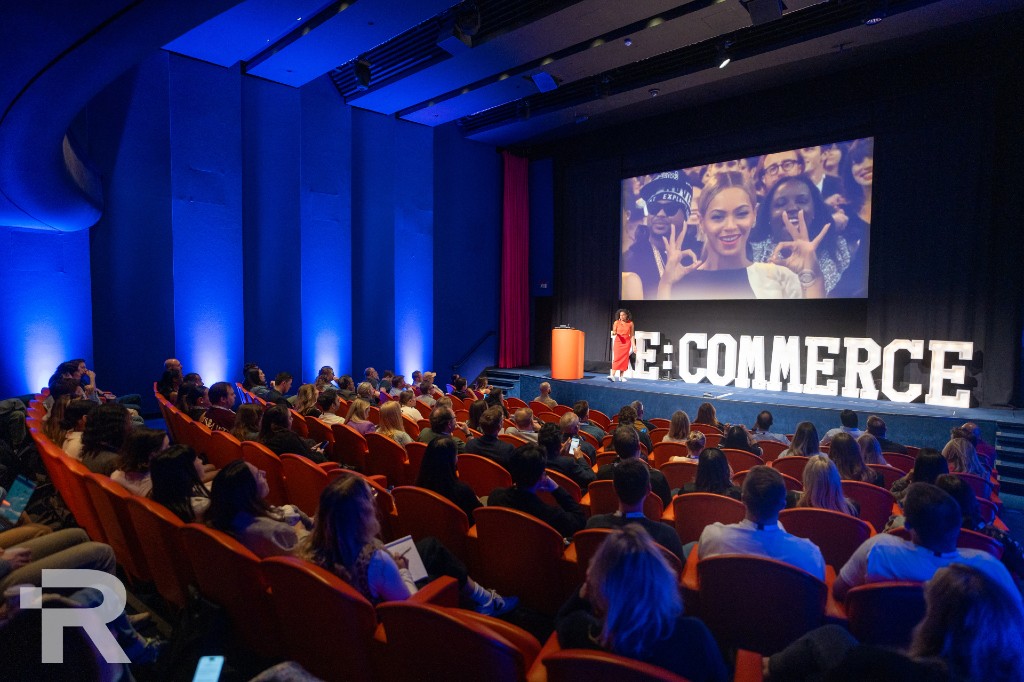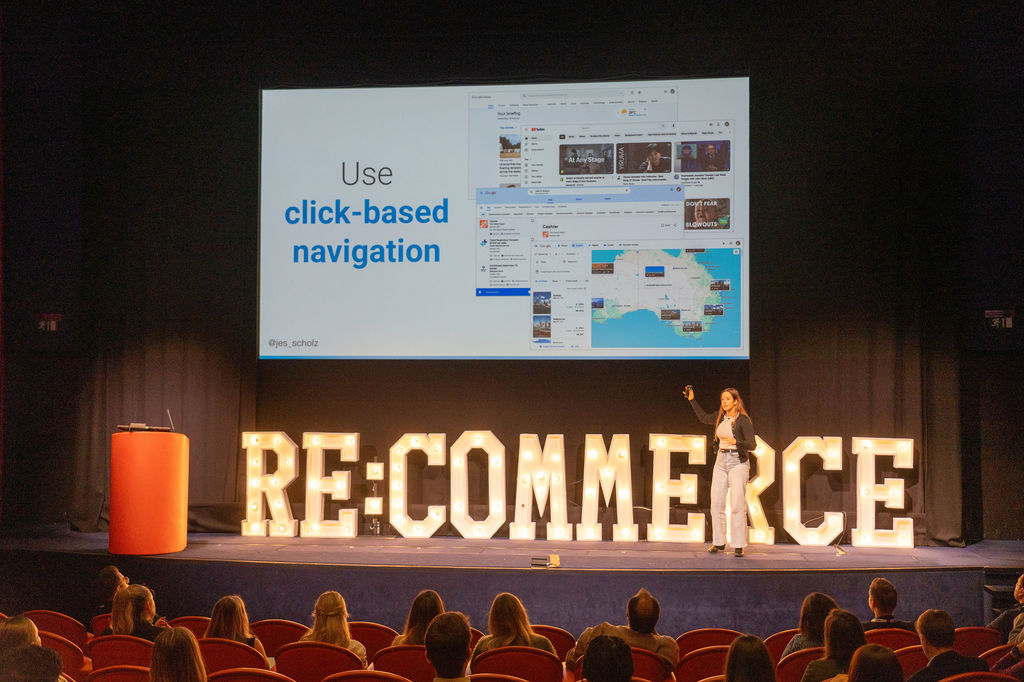
The full agenda for Re:commerce 2025 has been announced

There are now less than 10 weeks to go until Re:commerce 2025, and the full agenda has now been announced.
We’ve got an incredible line-up of speakers, boasting some of the brightest minds working in digital marketing, SEO and ecommerce right now. This is a must-attend event for ecommerce brands and marketers that want to keep their finger on the pulse of the rapidly changing digital landscape. To ensure continued growth in 2025 and beyond we need to be able to think differently and challenge how we do things, rather than expecting the same old tactics to continue driving revenue as customer behaviour changes.
Let’s take a closer look at our speakers and what they’ll be sharing with our attendees.
Our opening keynote — Andreas Ekström
Digital Humanist | Author | Journalist
Organic Intelligence is the New Superpower
Andreas Ekström has spent many years reporting on how media, business and politics is impacted by the major digital power players in the world, working as a culture reporter and columnist for Sydsvenskan, a national Swedish newspaper.
Andreas has also been an educator since 2010 and a regular on the international conference circuit, and is a highly sought after speaker that has been very well received across Europe thanks to the deep insight provided by his lectures.
At Re:commerce 2025, Andreas will kickstart the day with his thought-provoking ideas, questions and hands-on tools that help us to understand the impact the digital world has on relationships, culture and human interactions, stressing the importance of ‘organic’ intelligence as we enter the artificial intelligence revolution.
Gillian Ridley Whittle
Founder | Peachaus
Breaking the Mould in Retail Strategy
Pulling on her experience of over 30 years in commercial retail, Gillian Ridley Whittle will take Re:commerce attendees on her journey from big brand fashion director (M&S, Target, Topshop) to founder of Peachaus, a lifestyle brand with an ethical stance focused on changing customer mindsets and building a sustainable brand.
Gillian will share her experience of applying offline learning to building a digital presence, helping us to understand how experience-based retail is taking shape online and providing inspiration of how to think differently in the world of ecommerce.
Crystal Carter
Head of SEO Comms | Wix
Building Brand Visibility in an Evolving ecommerce Landscape
Large language models (LLMs) are causing a lot of disruption to the search landscape right now, and brands need to adapt if they want to remain visible to their target market.
Backed by over 15 years of SEO and digital marketing experience, Crystal Carter will provide Re:commerce attendees with her take on the challenges ecommerce brands have to tackle—but also the opportunities that AI can offer.
Crystal will also discuss the broader implications on marketing in an AI-enabled world, ahead of a quickfire Q&A session with fellow Re:commerce speaker Shannon McGuirk and Re:signal’s founder Kevin Gibbons.
Shannon McGuirk
Digital PR Director | Re:signal
How to Win in Digital PR Through Audience Understanding
Shannon McGuirk joined Re:signal as Digital PR Director in October, bringing with her a wealth of experience of driving organic growth for leading ecommerce brands like ASICS, FatFace and Under Armour.
Shannon is also a veteran of the industry speaker circuit, having given talks at MozCon, BrightonSEO and Outreach, and we’re delighted to have her as part of the Re:commerce 2025 line-up.
» Read more about: The full agenda for Re:commerce 2025 has been announced »
Revisiting 3 big themes from Re:commerce 2024

It’s almost 12 months since Re:commerce 2024, which proved to be a fascinating event filled with expert insights from some of the brightest minds working in e-commerce, digital marketing and SEO.
We summarised the event’s key takeaways here, but ahead of Re:commerce 2025 on Friday 16th May we wanted to revisit those themes and give our updated take, and a hint of some of the hot topics and insights we’ll be sharing at this year’s event.
AI continues to reshape search
Unsurprisingly, artificial intelligence was a key topic of discussion for multiple speakers at Re:commerce 2024, including how it’s reshaping search.
While our job used to be to create content that resonated with users and was optimised for search algorithms, we’re now also needing to think about how to get visibility with AI in the mix. Focus is needed on brand connection and bringing our A-game when creating content. AI won’t surface our content unless it adds value to the end user.
Jono Alderson, an award-winning technical SEO consultant with almost 20 years experience in the industry, discussed how we all need to take more responsibility for the low value pages being created by AI.
As Jono points out, what we fail to consider is that there are lots of people just like you following the exact same process for content production.
Figuring how to create unique, high value content isn’t necessarily a new issue for marketers, but AI is reshaping the search landscape. As Jono highlighted in his talk, Google (and other search engines) can increasingly synthesise results without having to send visitors to your website.
Dawn Anderson, international SEO consultant and MD at Bertey, discussed similar points in her talk. Dawn explained how AI is now more accurately predicting search preferences and outperforms human evaluation for ranking—all at a fraction of the cost.
Our take
In 2025, successful SEO strategies are starting to prioritise a strong focus on positive brand building, as well as an increased focus on efficient crawling and discovery of content. This isn’t just about surfacing content in Google Search, but across all touchpoints in the customer journey. Google has been crawling websites for decades now, but Answer Engine crawlers need a helping hand to see the ‘right’ content and serve it up to the user. Brand trust and deep subject matter expertise are now essential to achieving visibility.
Mediocrity is not a means of survival
» Read more about: Revisiting 3 big themes from Re:commerce 2024 »
The EU Accessibility Act: What eCommerce Websites Need to Know and Do

Does your company have a plan for complying with the EU’s upcoming Accessibility Act? Coming into effect on 28th June 2025, it requires any business that wishes to trade in the EU to provide accessible digital services. For eCommerce websites, complying with the EU Accessibility Act is going to be essential – and it could mean big changes to how your website operates.
In this blog, you’ll get up to speed on what the Act is, why it’s being introduced, and how you can start preparing.
What is online ‘accessibility’?
Accessibility is not a new thing. The World Health Organisation reports that 16% of the world population (1.3 billion people give or take), live with a disability. However, there has been a noticeable uptick of interest in the topic among companies recently (that interest should have always been there really) –
» Read more about: The EU Accessibility Act: What eCommerce Websites Need to Know and Do »
5 ecommerce tips from our SEO experts

It’s been a tough time for ecommerce brands, with the combined economic shocks of high inflation and the cost of living crisis impacting both overheads and consumer buying power.
It’s also been a year of change in the organic SEO landscape, all of which translates to tricky terrain for brands to navigate.
With this in mind, we thought we’d ask our expert SEO team what they thought about the last 12 months, and what to have on your radar. Check out the advice Marie Turner, Amanda Beales and Kevin Gibbons have for ecommerce brands heading into 2025.
1. Focus on high conversion rate keywords
We’ve seen massive changes to ecommerce SEO in the last 12 months, and that’s on top of it having been a tough year for the sector as a result of continuing cost of living pressures.
The biggest change in 2024 has been the insertion of AI results into the search results pages (SERPs) for a lot of informational keywords—but we expect AI results to be introduced to Google Shopping at some point in 2025. This might offer some benefits for the consumer, but as brands we’re going to lose some traffic to these AI answers.
To counteract this shift we need to remember traditional marketing principles—and it’s an approach we’re taking with all of our clients.
You need to understand your niche, get to know your customers really well, and make sure you answer their questions and expectations when they search.
We’ve also seen that product pages are becoming more important, so we’re looking at very niche categories with keywords that have lower search volumes, but that convert at a much higher rate.
2. Product page optimisation has never been more important
The ability to shop directly in the SERPs isn’t necessarily new, but as the user experience has improved we’ve seen that more and more consumers are taking this route. The top ten results for 85% of apparel-related searches have organic product tiles in them now, and retailers are taking the bulk of this traffic.
This means your product listings need to be ready to be served up in the SERPs.
To capture this traffic, marking up structured data within the different elements of your product pages is essential, for example optimising product titles and product images, and emphasising any unique features of your products or service
3. You need a faceted navigation strategy
Faceted navigation has been really important to ecommerce websites for a long time, that is, being able to index specific filters and answer niche queries.
Google has recently been doing a lot of work to surface product pages in the SERPs more frequently and if, as we expect, they introduce AI results to Shopping soon, an optimised faceted navigation strategy will be even more important. Getting this in place now will allow you to steal a march on the competition in terms of being indexed for niche keywords.
4. Solve for consumers at every stage of the customer journey
Don’t just optimise your bottom of funnel touchpoints, but instead get to know your customer and what they expect and search for at each stage of the customer journey.
Think about their specific interests and what content you can create that engages them, answers their questions or educates them on something new. Taking this full funnel approach, from awareness to consideration to conversion, will allow you to maximise revenue.
5. Download the Sportswear and Athleisure Ecommerce SEO report
Finally, if you’re a sportswear and athleisure retailer, make sure you check out our free industry report. We explored this growing sector and analysed the top performers in organic search, as well as the strategies they’re adopting.
It had been our expectation that more niche branded sites would perform better, because that’s what Google had rewarded historically. However, we found that the more generalist sites had the biggest share of voice over the last 12 months.
We also found out that user satisfaction was higher online than shopping in store (56% versus 44%), demonstrating the value of investing in improving and streamlining the online shopping journey.
Masterclass: Optimising Salesforce Commerce Cloud (SFCC) Sites for SEO: Part 3 – Manual and Rule-Based On-Page SEO Implementation

In Part 1 of our guide on optimising Salesforce Commerce Cloud (SFCC) sites for SEO, we explored the essential aspects of hostname configuration, location mapping, and URL structure.
Part 2 covered another crucial element of SEO: website crawling and redirect tools to enhance indexing and crawling strategies for URL prioritisation.
Now, in Part 3 of the series, we turn our attention to the crucial elements of on-page SEO. While technical SEO sets the stage for search engines to effectively crawl and index your site, on-page SEO ensures that each individual page is primed for ranking well in search engine results.
Masterclass: Optimising Salesforce Commerce Cloud (SFCC) Sites for SEO: Part 2 -Website Crawling & Redirect Tools

In Part 1 of our guide on optimising Salesforce Commerce Cloud (SFCC) sites for SEO, we explored the essential aspects of hostname configuration, location mapping, and URL structure. Now, in Part 2, we’ll dive deeper into another crucial element of SEO: website crawling and redirect tools.
Ensuring your SFCC-based site is crawlable by search engines and utilises properly managed redirects is critical to maintaining and enhancing your site’s search visibility. Without the right setup, you could encounter issues like crawl errors, duplicate content, and lost link equity, all of which can harm your rankings. In this instalment, we’ll walk you through the tools and strategies within SFCC that help you optimise your site’s crawling efficiency and manage redirects effectively, ensuring your site is not only visible to search engines but also delivers a seamless experie
Website Crawling & » Read more about: Masterclass: Optimising Salesforce Commerce Cloud (SFCC) Sites for SEO: Part 2 -Website Crawling & Redirect Tools »
Masterclass: Optimising Salesforce Commerce Cloud (SFCC) Sites for SEO: Part 1 – Hostnames & URL Structure

Salesforce commerce cloud (SFCC) is a commonly used, cloud-based platform for eCommerce sites, be it large, small, B2C or even B2B. As an all-in-one tool for website hosting and catalogue management, SFCC features an array of valuable settings to enable you to serve products and categories to users across multiple countries and domains.
When used to its full capacity, SFCC can help you to implement SEO functionality expertly and with ease, however, the platform can be difficult to navigate without proper guidance and consideration.
We’ve identified some key areas within SFCC Business Manager (the command centre for your eCommerce platform) which can be harnessed to ensure best practice for SEO, which we’ll be looking at throughout this three-part series:
Key Predictions for Sportswear Ecommerce: SEO and Content Marketing Trends for 2025

As the sportswear and athleisure markets continue to evolve, brands and retailers are presented with new opportunities to leverage changing consumer behaviour and emerging digital trends. Our latest Sportswear and Athleisurewear Ecommerce SEO Report offers crucial insights, giving brands a clear path to strengthen their online presence in this fast-growing sector.
In this post, we’ll explore key predictions for 2025 sportswear ecommerce from an SEO and content marketing perspective, and how brands can stay competitive in a rapidly shifting market.
DOWNLOAD Sportswear and Athleisurewear SEO Report
1. Athleisurewear’s Growth is Unstoppable
In 2025, the UK sportswear industry is set to be one of the fastest growing sectors on the market, with revenues expected to hit £17.1bn at 4.5% CAGR, up from £13.8bn in 2020.
The explosive growth of sports and athleisurewear won’t be restricted to the UK, with the market projected to grow at a CAGR of 9.91% through to 2031, potentially reaching a staggering $725.55 billion. The rise of athleisure reflects a shift in consumer preferences, where comfort and functionality, in addition to aesthetics, are becoming the most desirable characteristics in everyday fashion.
So, what does this unstoppable growth mean for your ecommerce strategy in 2025 and beyond?
Top 10 Key Learnings from Our Ecommerce Sportswear and Athleisurewear Report

The sportswear and athleisurewear industry is evolving rapidly, driven by shifts in consumer behaviour, technological advancements, and emerging trends. For ecommerce brands, staying ahead of these changes is crucial for capturing market share and building strong customer relationships. Our 2024 Ecommerce Sportswear and Athleisurewear Report highlights the top 10 key learnings that can help brands navigate this dynamic landscape, from embracing sustainability to leveraging the latest SEO strategies.
1. The Sportswear Market is Booming
The global sportswear market is poised for significant growth, expanding from $428.21 billion in 2021 to a projected $725.55 billion by 2031. This surge is largely driven by the increasing popularity of ecommerce, which has become a vital channel for sales, especially in the UK. Here, online sportswear sales are not only growing but are also outstripping the performance of physical retail stores, highlighting the critical importance of digital strategies for brands.
2. Direct-to-Consumer (DTC) is the Future
Top sportswear brands such as Nike, Adidas, and Puma are increasingly shifting towards a direct-to-consumer (DTC) model, which allows them to bypass traditional retail channels. This approach enables brands to forge stronger, more direct relationships with their customers while gaining greater control over the entire ecommerce experience. Additionally, DTC strategies provide valuable first-party data that is essential for personalizing marketing efforts and driving customer engagement. Adidas and Nike have been leading the way in DTC performance over the last 5 years.
3. Retailers and Marketplaces Still Dominate Non-Brand Traffic
Retailers and marketplaces continue to hold a commanding presence in the sportswear ecommerce space, capturing 77% of non-brand traffic. For individual brands, this dominance presents a challenge: to carve out a distinct identity and secure higher rankings for key search terms. To stand out, brands need to innovate their SEO strategies, focusing on niche keywords and unique content that can differentiate them from the broader retail landscape.
4. Seasonality Requires Agility
The sportswear industry is highly seasonal, with consumer demand and fashion trends shifting rapidly throughout the year. To stay competitive, ecommerce brands must be agile, ready to adjust their SEO tactics and marketing strategies in response to these seasonal changes. By aligning their campaigns with current trends and consumer behaviour, brands can better capture the attention of their target audience at the right time. We’ve seen brands reacting at lightning speed to search trends, and content themes emanating from the European Championships, Wimbledon, and the Paris Olympics games this summer to gain organic traction.
5. Visual Content is Crucial
In the sportswear market, where visual appeal plays a significant role in purchasing decisions, balancing SEO with engaging visual content is essential. Brands need to ensure that their websites are not only optimized for search engines, but also visually compelling enough to attract and convert customers. High-quality images, videos, and interactive content can enhance the shopping experience, making it easier for consumers to connect with the brand and its products. Nike have enjoyed rapid growth in this niche over the last 10 months, thanks in part to the high quality visual content on their PDP and category pages. Nike also do a fantastic job of leveraging UGC (user-generated content) on their product pages. A smart move;
» Read more about: Top 10 Key Learnings from Our Ecommerce Sportswear and Athleisurewear Report »
The Google Search API leak: What it actually means for your site

On Sunday 5th May 2024, API documents were leaked from Google’s Search division. Erfan Azimi, an SEO and founder of EA Eagle Digital, leaked the information, and then Rand Fishkin and Michael King both broke the news.
For decades, the way search works has been shrouded in mystery, and for good reason. Many old SEO tactics like keyword stuffing, buying links, hiding keywords/content using cloaking, etc. stopped Google and other search engines from surfacing the most relevant sites. Usually, when algorithm factors are revealed, they’re abused. Subsequent algo updates were designed to prevent these tactics from being successful.
» Read more about: The Google Search API leak: What it actually means for your site »