Why your product data is costing you visibility, and what to do about it

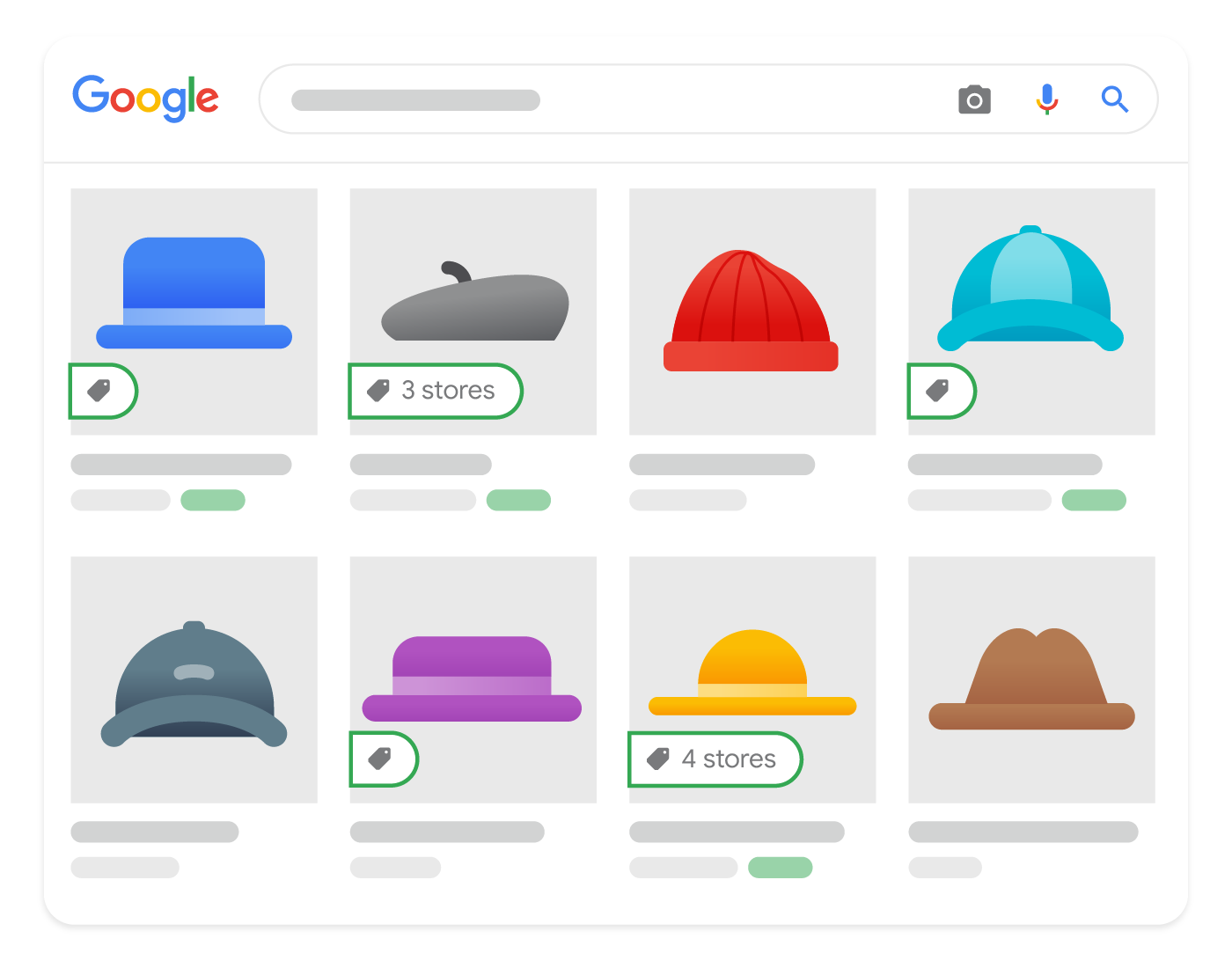
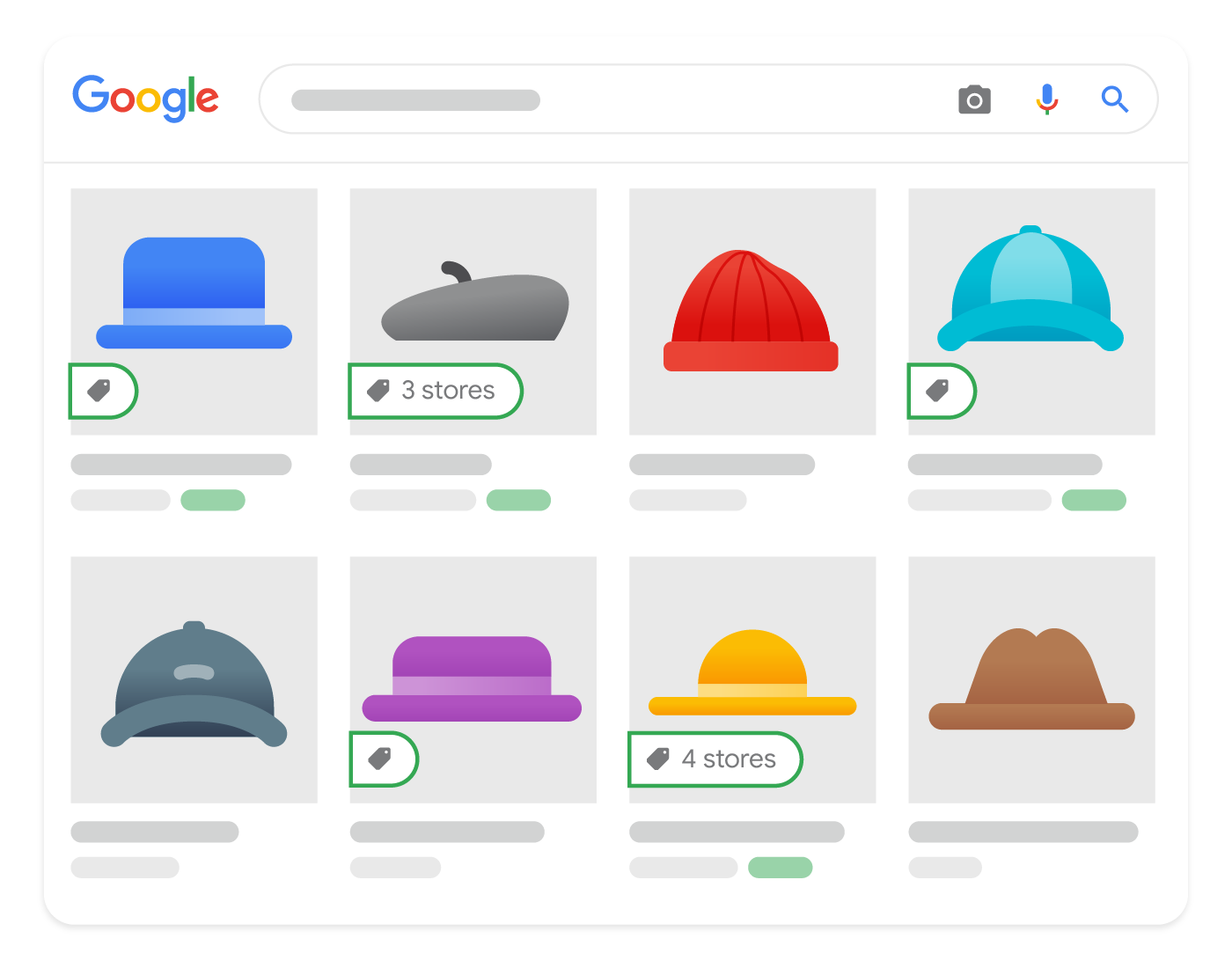
Although optimising for AI search is getting a lot of attention at the moment, there is a major opportunity that many ecomm brands are missing out on. And it all comes down to product data. In fact, it could be costing your brand across organic shopping, paid, and AI search simultaneously.
Google still remains a key sales driver for online retailers, despite the new AI kid in town. A reported third of shopping queries happen on Google, which relies on brands’ product data to respond to. But product feed optimisation is a trick many are missing.
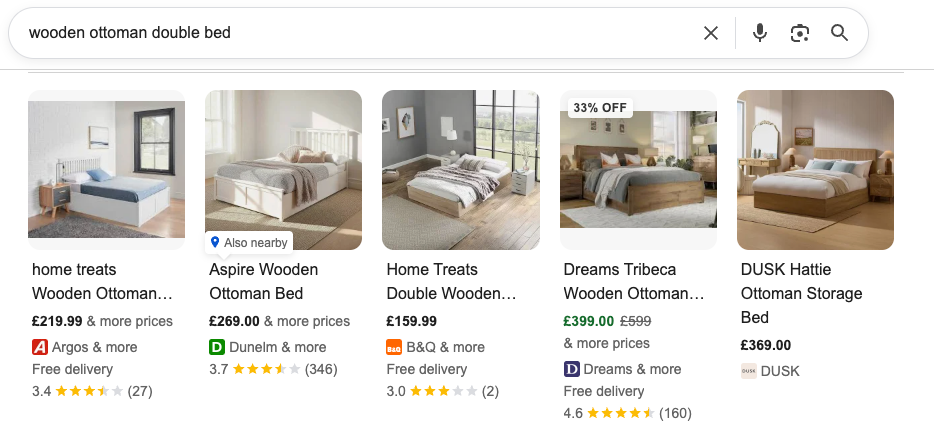
An example of products in Google’s search results
We’ll be digging into how product data best practices can transform your success in search visibility and get more eyes on your products across multiple search channels. The good news is the solution is pretty straightforward. So, let’s take a closer look at what’s going on.
The intrinsic value of product data
Before we delve into anything else, let’s ask why product data best practices are worth the investment.
Accurate and detailed product data is highly important across AI, organic, and paid shopping queries because it determines what prospective shoppers see. Google uses this data to deliver organic product grids on SERPs, and ChatGPT currently builds out the majority of shopping carousel results, pulling from merchant feeds, not just product pages.
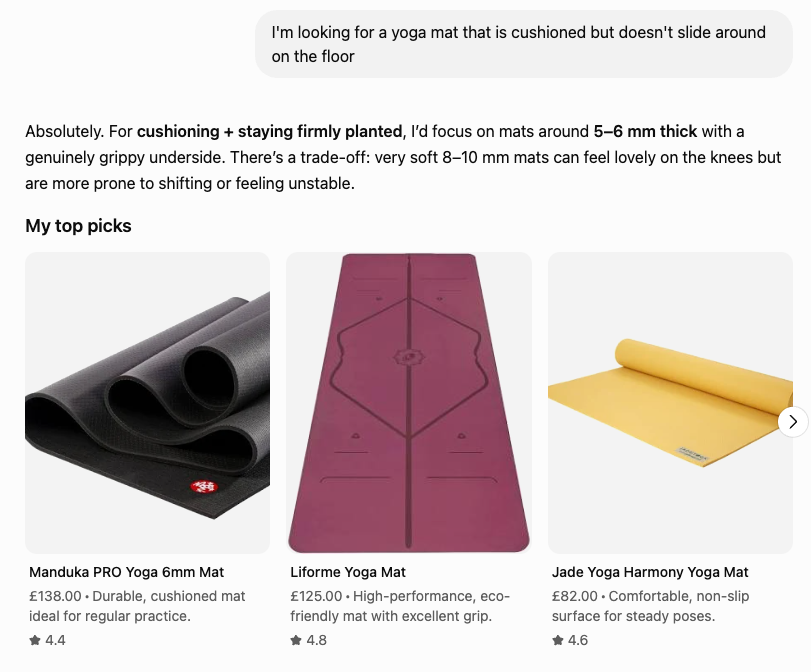
ChatGPT results for a product query combine advice with product carousels
To put it simply, getting your product data practices right can greatly impact three separate search channels. And two of these search channels pull from the same product feed source: organic and AI.
However, optimising product feeds isn’t on the radar of many businesses. There are over 35 million product listings on Google Shopping Graph, but only those with the richest information will rise to the top.
So, how do you optimise your product data for all three search channels? “Winning” the Google product grid is a combination of:
- Optimising poor product feeds
- Separating organic and paid feeds
- Enriching product data by adding in missing schema and product page optimisation
- Ensuring the consistency of information across product feeds, product pages, and product schema
- Ensuring crawlers can retrieve all product info from your product pages.
Common product data mistakes that hurt organic shopping visibility
There are two specific feed mistakes that brands frequently make, which reduce product visibility across different search channels. Brands typically miss or glance over each of these, making them relatively straightforward to improve.
Consistency around product data, schema and product feeds
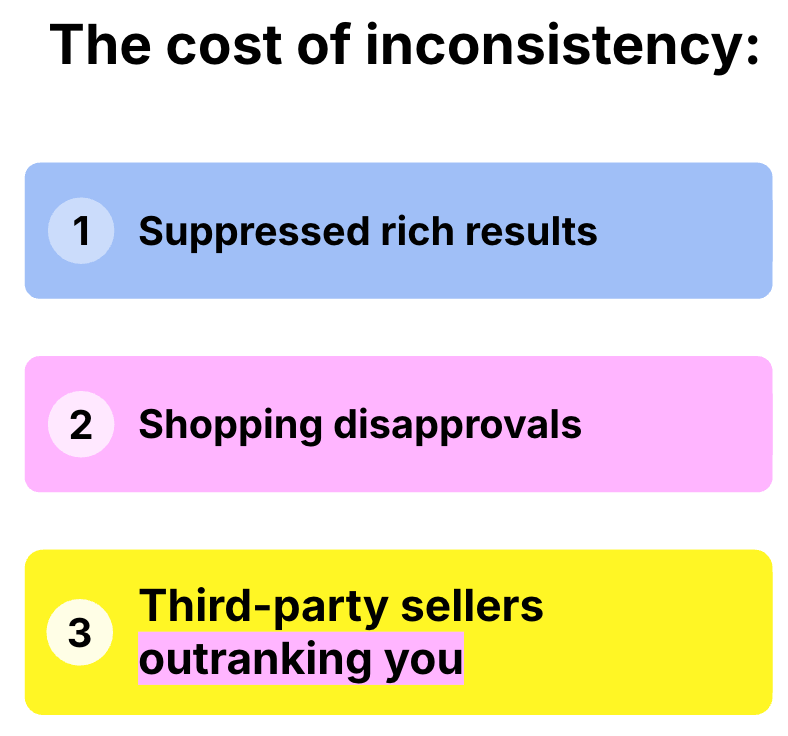
The first most common feed issue is neglecting to ensure all data sources are synced up and consistent. It’s really important that the product schema reflects all product data information and that it’s correct.
Following on from this, product feeds should be consistent with all website data and schema. This is not only important for search engines but for humans, as a lot of this data is key to decision-making; think of things like returns information and shipping costs. These contradictions in product data can lead not only to higher bounce rates, but also to Google prioritising competitors over your brand. Plus, missing key product data like imagery or shipping details can also get your products disapproved.
Not using free listings
The second most common product data feed issue is not maximising free organic product listings in Google Merchant Center. These are extremely useful, not just for getting eyes on your products, as they can also be used for A/B testing for different optimisations.
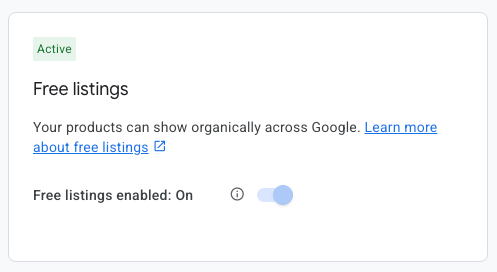
Free listings, within Merchant Center’s marketing method settings, aren’t always enabled by default
It’s important to achieve consistency across all of these points, making sure everything is as clear as possible. Keeping on top of good hygiene and ensuring critical information is up to date is essential. These are must-haves like images, delivery info, and so on; without these, Google won’t show your product listing in its results.
Product data best practices
So now we recognise the value of product data, what can brands do to optimise it? Let’s go through best practices that’ll make a big difference.
Separating organic and paid feeds
Organic and paid product feeds should be like water and oil; they shouldn’t mix.
But why? It’s best practice to work on organic optimisation in isolation so it does not interfere with any paid activities. This is because not all paid feeds include every product a brand sells. Some products just don’t make sense in a paid feed, or there may not be the budget to cover all products well in product listing ads. However, organic is different. And if you don’t have every product in an organic feed, you could be missing out on one of your products being served in organic queries.
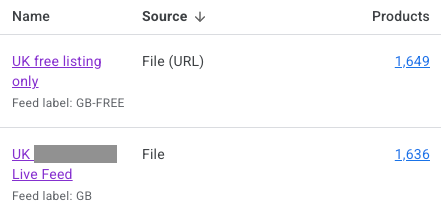
An example of a free listings feed and a paid listings feed
Aligning your separate, organic product feed with your website information also adds another layer to reinforce product entities. It also signals to Google why you are a definitive source for this product. All in all, it’s just good practice.
And lastly, a major benefit of having an organic product feed is that you can also test things out for free, but without a knock-on effect on the paid side. The learning here is that separating organic and paid product feeds makes things a lot cleaner, standardised and easy to work with.
Identifying and updating “unenriched” product data
Many brands miss out as their product data is “unenriched”; it offers no useful, defining product characteristics that can help users make purchasing decisions. A common example is vague product titles that miss key elements like product type, gender, use case, and USPs. These are distinguishing factors for what people are looking for, and help your product meet more specific, long-tail queries. If you’re unsure whether your product title meets the mark, ask yourself: what does this product look like in isolation? Does the title make it clear what it actually is?
“Unenriched” product data might also look like when a product feed doesn’t reflect all the information that’s found on a website. This can include missing descriptions, reviews and ratings, which carry a lot of weight in the decision-making process. As you need data to support decision factors, it’s important that these are included! 47% of shoppers abandon their cart because of additional costs. You can circumvent this by ensuring all product data is included and visible to users before they reach the checkout stage.
Another reason why product data may be “unenriched” is because the product feed is out of sync, especially regarding prices and stock levels. These are more susceptible to mismatching because they update more regularly and, importantly, can get you disapproved for being shown in product listings.

Mismatched product availability is just one of the causes of products not being featured in Google’s product results
Keeping on top of “unenriched” product data
It’s really important that your product feeds, and subsequently enriched product data, are in sync with your website. Where possible, it’s best practice to update attributes at source level, as opposed to supplying information manually. This makes it a lot easier to keep on top of new products and new attributes when they’re added. For example, it’s easier to supply the item group IDs directly in a feed file, because it can pull the group ID from your CMS or PIM and be rolled out across all products at once.
Implementing product group schema
Of all the product schema markups, product group schema is the one brands often skip. But it holds incredibly important information. It explains parent-child relationships between a master product (for example, a pair of shorts in a certain style) and the variants of that master product (for instance, the various colours and sizes available).
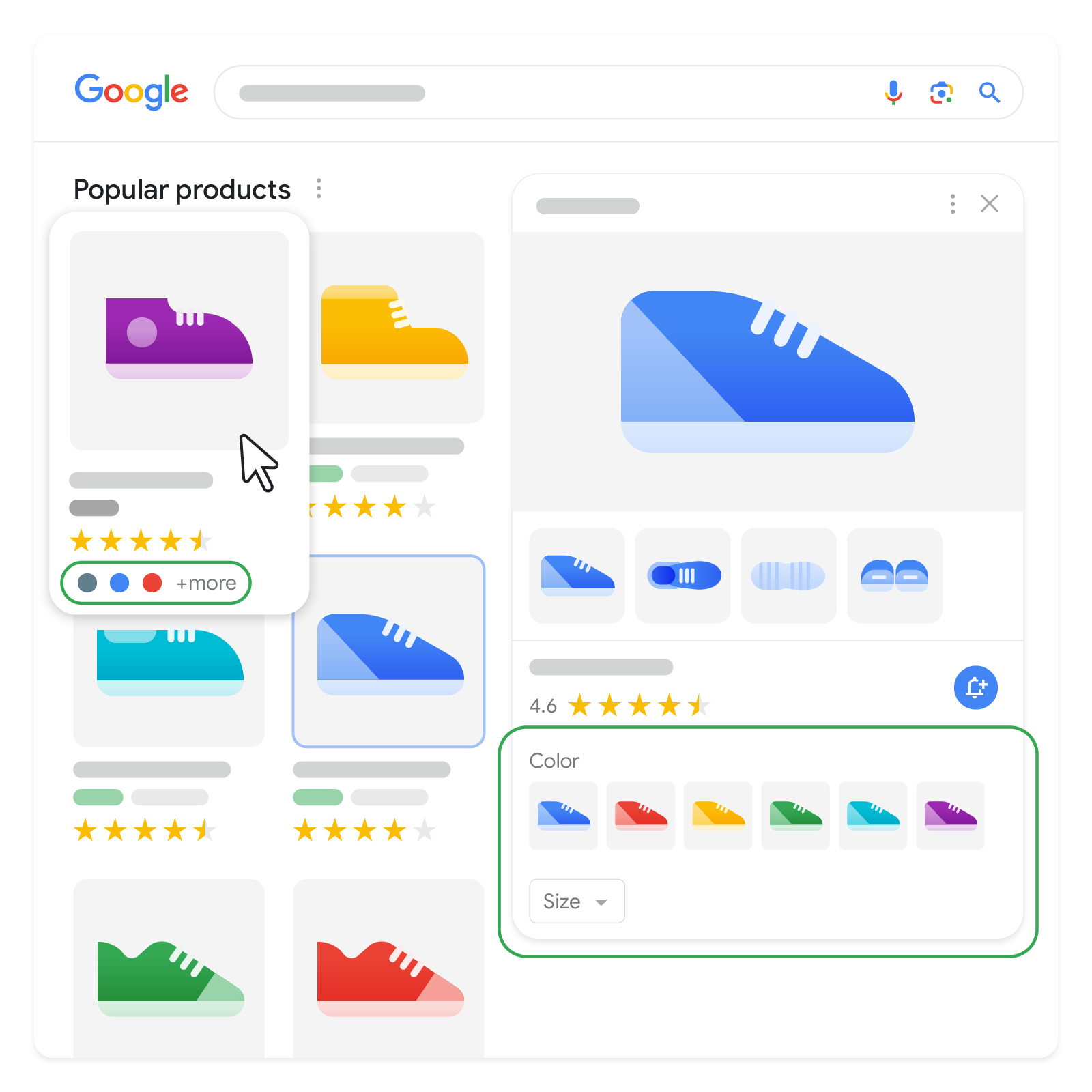
Using schema, Google can understand the different variations of a main product. (Image source: Google)
Within that, each product variant also has its own schema which explains what differentiates it, as well as any other unique information about that product, such as a different price if the brand has discounted a certain colour. When done well, all of these different schema types are nested within each other like a Russian doll.
As these product variants show up in Google Shopping, it’s really important to include schema to effectively communicate these variant relationships with Google. Otherwise, it can all get rather confusing.
Coming in a close second is delivery and returns info schema. As we mentioned previously, delivery costs and free returns are big decision factors for users. You can put this info directly into Merchant Center settings and apply it to multiple feeds at once. The only thing to note here is that it needs to match website information.
A word of caution: keep shipping and returns schema data on the homepage, or the delivery or returns page. It’s not good practice to include it on every page, as even if delivery and returns schema on a product page is incorrect, it still takes precedence.
Impact on AI search results, beyond organic and paid
It’s no secret that AI search is gaining more traction, and with it, interest in AI search product visibility. Now, AI overviews and AI Mode are showing shoppable products where relevant. These both rely on the Google product graph for their recommendations, which product pages, Merchant Center, and schema data populate. It’s another reason to keep the product feeds optimised.
There’s been a significant change in user behaviour since the roll-out of AI chat, shifting product discoverability to become something different. Users want things quicker than ever, and developments are responding to this.
For instance, Google are starting to roll out agentic shopping tools to retailers across US, UK, Canada and Australia. With technology like the Universal Commerce Protocol (UCP), users won’t even need to go on the brand’s website to complete a purchase; shoppers can do it directly within Google’s AI Mode. If brands want to get ahead of this, product data needs to be complete and ready, especially with opportunities to cross-sell.
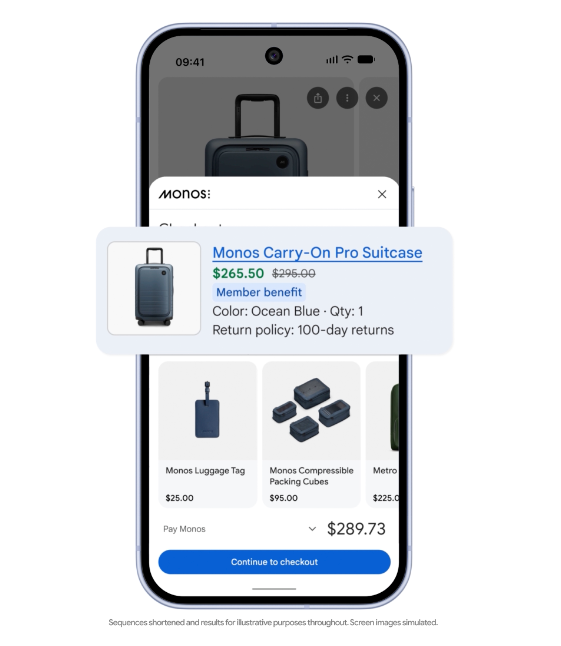
Google will enable consumers to buy directly from retailers across their AI surfaces.
Let’s not forget that ads for ChatGPT are launching, and shopping feeds will become a part of this new marketing channel. Getting your product data ready will put you in prime position for its greater rollout. Although it’s still early days and there is no data on how it’s performing, optimising your product data will do no harm as it’s already so valuable for other search channels.
Unlock your brand’s organic shopping potential
Although AI search is a hot commodity, accurate and complete product data still remains essential for e-commerce success across all search channels. Optimising your product feeds, pages, and schema for paid, organic, and AI is not only good for search visibility but also user experience. It also doesn’t need to be an arduous task, with best-practice processes that are easy to maintain. This is a straightforward win that can significantly impact three distinct search channels.
Need a little help digging into your product data? We’re here to help. Contact us to get started.