How to Create an SEO Data-Driven Content Strategy


How To Create an SEO Data-Driven Content Strategy
Content strategy is a hugely important part of the SEO process. Quite often it’s not given the level of attention it deserves, but done right it can be a significant driver of organic revenue and customer acquisition. To create an SEO data-driven content strategy that works, we need to understand what good content looks like. To do that we need to look at data and conduct research. It sounds time-consuming and expensive, which might put many businesses off. But actually, you can create an SEO data-driven content strategy in just 3 steps. Thanks to Illiya for help with the presentation slide design.The Value of Content for SEO
When we talk about SEO, we used to work on the principle that creating content was about making it work for Google. That meant content that was littered with keywords, known as keyword stuffing, and didn’t necessarily provide any value to its readers. As long as it was on topic, it ranked. But now it’s about creating content for people. Content needs to answer questions, provide content, be accurate, and add value. It should still have the essence of keywords, but you can’t just take a keyword and hire a copywriter on the cheap anymore. It’s all about quality – creating quality content that is accurate and adds real value. And that doesn’t come cheap, you need to invest in it.
Why Invest in Your Content
Creating content needs investment to make an impact. But when it comes to it being part of an SEO strategy, it feels like the content is under-rated and under-invested. It seems like SEOs and marketers are aware of the value of content. If you look at our LinkedIn poll of where people see the best results from their efforts, we can see that 50% of us get the best results from content rather than technical SEO or digital PR. But this isn’t reflected when we think about where our businesses spend their marketing budgets.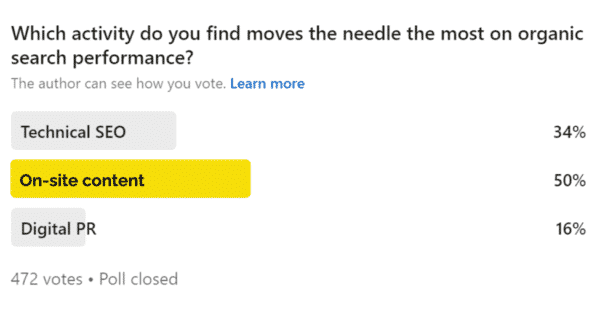 We need to address this problem of under-investment in content for SEO because the benefits are endless. Even without any extra search traffic, the pay-off of additional content could be significant. Creating content can drive better user metrics, more clicks, and can also support the traffic you drive from your other marketing channels like social media and email. But if you can level up and create high-quality content that provides better information than your competitors and attract better user metrics, the benefits are even greater. Your content will be more likely to outrank your competitors in the SERPs, giving you the potential to gain additional impressions, increased clicks, and ultimately more conversions. That is without considering the benefit your content can have on your other SEO efforts, like generating backlinks.
 So investing in the right quality of content should pay for itself several times over. But we still see that most of SEO spend goes on fixing technical aspects of a website (page speed, structured data, etc.) or on link acquisition and PR to improve authority and brand reputation. But why are we consistently overlooking the importance of having a strong content strategy and delivery plan?
How to Create an SEO Data-Driven Content Strategy
Creating content is easy. Creating high-quality content that is useful and works is a challenge. But it doesn’t have to be as long as you start with a strategy that follows these 3 steps:1. Content Auditing
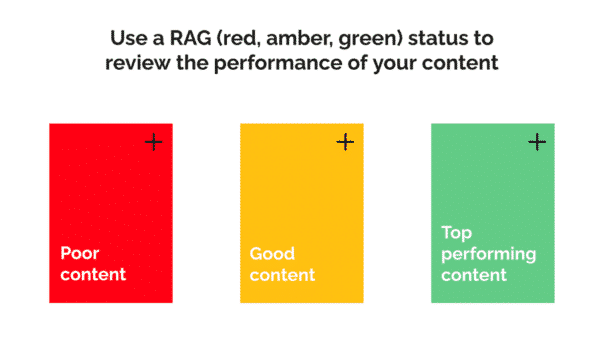
Before you start creating new content, you need to understand what content you have already got. Not only that but you need to understand how well it works. So start with a content audit. First, you will need to gather all of your URLs along with how they perform in key areas. To do this you will need to:- Export all indexed pages from Google search console
- Export analytics data for all of your pages
- Combine your two datasets into one
- Sort your data by conversion rate
- Colour code the URLs
2. Content Gap Analysis
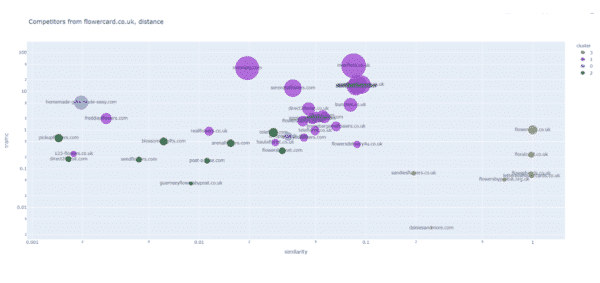
When you have a clear picture of where your opportunities are with your existing content you can factor in new content. But don’t forget that churning out volume is not beneficial and effective – it’s all about the quality of your content. So you need to make sure that you are creating new content that is based on the language that your customers use to search. Your analysis should involve 3 steps:- Identify who your competitors are in the search landscape
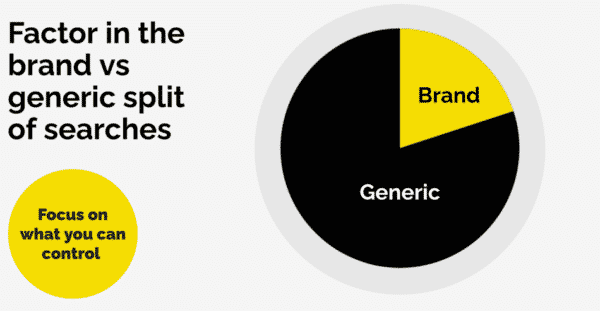
- Factor in the brand vs generic split of searches
- Research where the search demand is for key topics

3. Create A Roadmap
You should now have a plan for optimising existing content based on data-driven opportunities and new content ideas driven from competitor research. The next stage is filtering that information into a roadmap. You should aim to prioritise the data you have gathered in the previous two steps here, considering:- The value each action will drive your business
- Any seasonality factors that you need to consider
- Stage of the user journey that your content will target
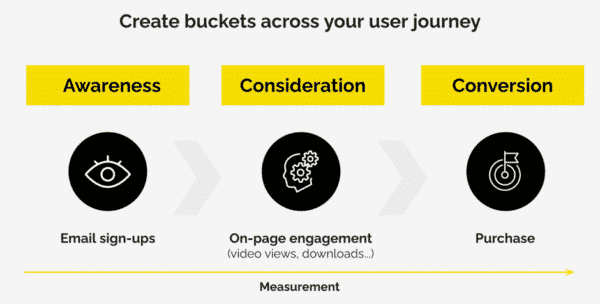 Then when it comes to briefing your content or sitting down to create it yourself, you need to consider more than just best practice writing for SEO. You should research each piece to gather more data on what type of content is ranking well in Google already, what users want to see, and how this differs from content you already have? Use this to identify how you can make your content better than what ranks already.
How To Measure Success
Creating content doesn’t stop once you hit publish. To make sure your content is successful at driving value to your business, you should monitor its performance and be prepared to keep investing at regular intervals. Whether you monitor your success based on clicks, ranking, or conversions, decide on your measurement before you start, which should be based on the right metrics for the aim of your content. For example, an awareness piece of content should be monitored on micro-goals like email sign-ups, content downloads, or video views, and less about direct conversions and sales. But content targeting the consideration stage should be monitored based on user metrics like bounce rate, pages per session, and time on site.
Keep Investing in your Content
If you notice your content is not performing as you expected or stops performing, then don’t be afraid to keep investing. When it comes to content, it’s important to always keep learning, testing, and refining.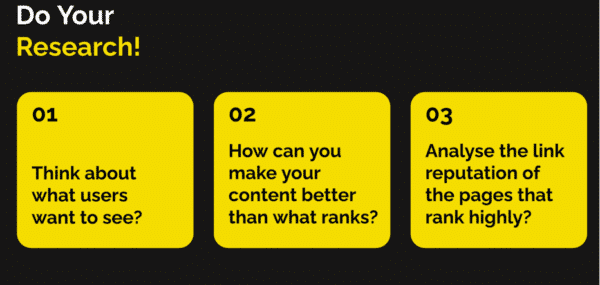 This is especially important if you have a high volume or high converting keyword that is performing well for your site. You will need to make sure you can keep it there by investing time, budget, and thought in staying current and staying useful. Your competitors are a moving target, they will be investing in creating content too, and your customer’s needs will be evolving constantly. So you will need to keep investing to stay relevant and competitive.
Summary
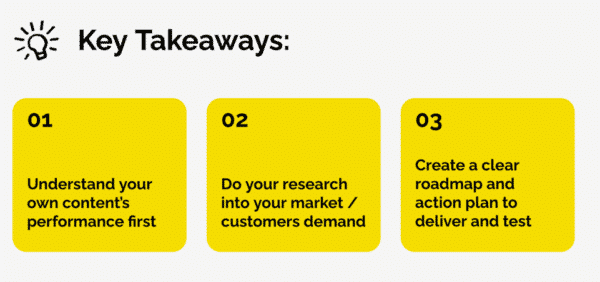 Creating an SEO content strategy is about creating high-quality content that performs. To do that, you need to make decisions and plans based on the data you have available, which you can gather in just 3 steps.
You will need to start by gathering data that helps you to understand your own content’s performance. Then you can research market demand, gathering data on your competitors. You can then use these data points to create a clear roadmap and action plan to deliver, which you can then continually test and learn to keep improving.
The content of these 3 simple data-driven steps can be rewarding and drive strong performance metrics. It might require investment, whether that is in time or money, but content is important and massively beneficial. It should be taken at least equally as seriously as technical SEO and link reputation, if not more so. Make content your king! Invest in producing the right content in the right place at the right time.
Creating an SEO content strategy is about creating high-quality content that performs. To do that, you need to make decisions and plans based on the data you have available, which you can gather in just 3 steps.
You will need to start by gathering data that helps you to understand your own content’s performance. Then you can research market demand, gathering data on your competitors. You can then use these data points to create a clear roadmap and action plan to deliver, which you can then continually test and learn to keep improving.
The content of these 3 simple data-driven steps can be rewarding and drive strong performance metrics. It might require investment, whether that is in time or money, but content is important and massively beneficial. It should be taken at least equally as seriously as technical SEO and link reputation, if not more so. Make content your king! Invest in producing the right content in the right place at the right time.
Further Reading
For case studies and more information about putting your SEO strategy into practice, listen to our CEO, Kevin Gibbons, talk at Ungagged search conference.