Getting Seen, Cited and Shared

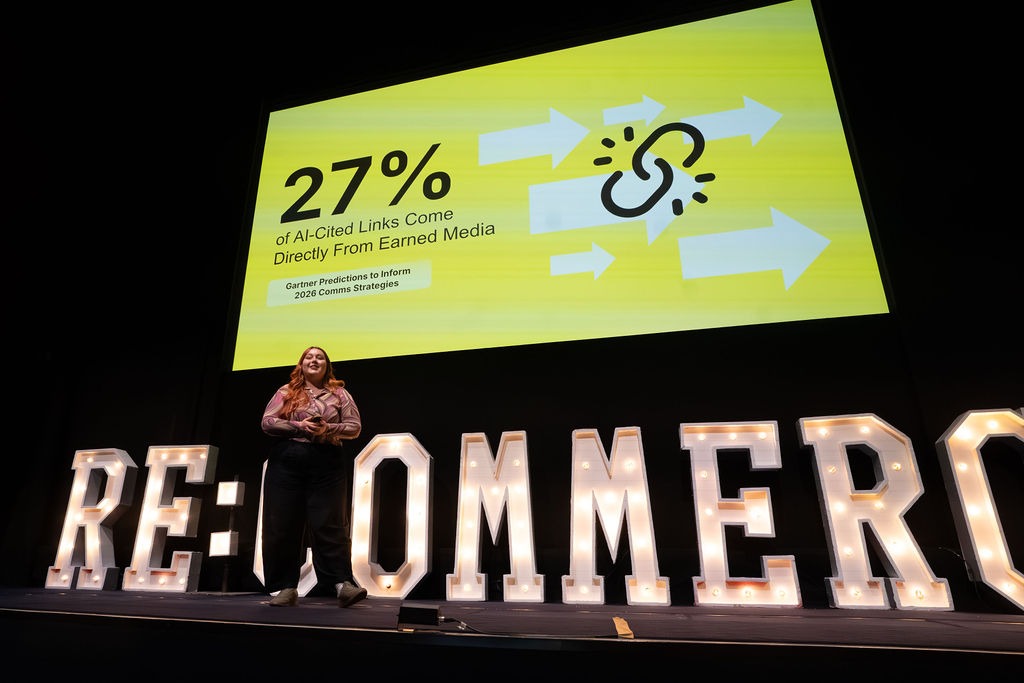
Based on a presentation “Getting Brands Seen, Cited and Shared: Using Data Led Digital PR to Win in Search and AI” by Emily Salt, Digital PR Production Manager at Resignal delivered at Re:commerce 2026
For years, the mandate for Digital PR was straightforward: build high-authority backlinks to signal credibility to Google and push your site up the organic rankings. It was an elegant bridge between traditional publicity and technical SEO.
But in 2026, the goalposts have shifted dramatically.
Search engines, Large Language Models (LLMs), and AI Overviews are increasingly looking beyond your own website to understand who you are. External validation is no longer just a ranking signal, it is the very foundation of how your brand is remembered and surfaced in an AI-driven world. If AI is the new gatekeeper of discovery, digital PR is how you earn a place in its memory.
The Marathon Mindset: Building Real Momentum
Let’s establish a quick reality check: digital PR is a marathon, not a sprint. There are no guaranteed day-one results, and building equity takes time. In fact, an analysis of campaign data at Root Digital revealed that, on average, it takes 38 days for a campaign to secure its very first link.
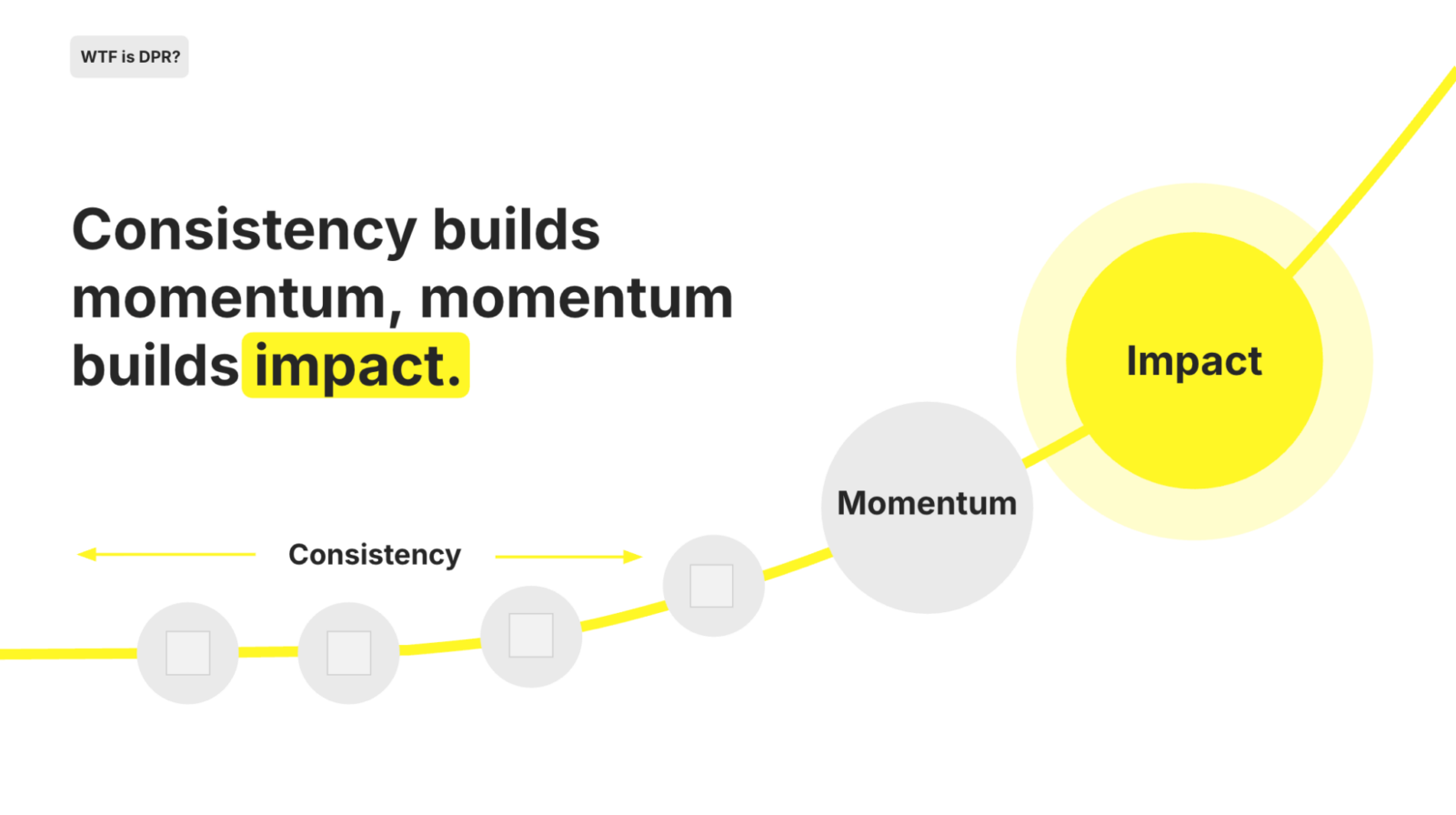
The most effective digital PR strategies are never built on isolated, standalone efforts. Real power comes from compounding momentum, where each activity builds on the last, making coverage easier to gain, stories stronger, and overall organic impact significantly greater over time.
To bridge the gap between large, data-led campaigns, brands should leverage short-term, high-impact tactics:
- Expert Access: Digital PR relies heavily on credible voices. Having internal specialists who can confidently offer informed opinions on breaking news is critical.
- Agile Sign-offs: Media opportunities are highly time-sensitive. If your business suffers from multi-layered approval bottlenecks, you will miss the moment entirely.
- The E-E-A-T Engine: Fast-turnaround reactive PR directly supports Google’s E-E-A-T guidelines by showcasing your active, real-world expertise in real time.

Future-Proofing with Bulletproof Methodologies
Journalists, and by extension, AI crawlers, need confidence in more than just a catchy headline. They need absolute trust in the data and the exact process used to gather it. If your methodology is weak or unclear, your story’s credibility instantly collapses.
A future-proof data campaign must be built on three core pillars:
- Logical & Repeatable Structure: Journalists shouldn’t have to perform mental gymnastics to figure out how you reached your conclusions. Your methodology must be clean, transparent, and easy to interpret.
- Rigorous & Question-Resistant: The research must stand up to intense internal and external scrutiny.
- Multi-Angle Longevity: The strongest campaigns are never built on a single story. A great dataset should yield multiple angles and narrative hooks, allowing you to sustain outreach over a much longer period.
Case Study: The Cost of Weak vs. Strong Data
To see this in action, look at how methodology impacts real-world success. A few years ago, a campaign attempted to find the “world’s most popular beer” based entirely on 12 months of search volume. Because the data was pulled during 2021, the top result was “Corona”. On the surface, it was a data campaign, but contextually, the methodology failed to account for real-world anomalies, hurting its credibility.
Compare that to a campaign built by the Root Digital team analysing over 97,000 Google reviews to find the world’s most “underwhelming” tourist cities. The team meticulously filtered out false positives and negatives. The result? A massive global footprint across 37 countries, an official integration into the Hungarian Tourism Board’s marketing, and a 165% increase in client content visibility within three months. Because the framework was so robust, it has now transitioned into a highly anticipated annual report.
The New Age of Search: Earning Your Place in LLM Memory
Unlike traditional search engines, LLMs do not rank websites in a static, fixed order. Instead, they synthesise answers based on patterns and relationships across the data they were trained on. Research shows that 27% of AI-cited links come directly from earned media. If you want your brand to appear in chat retrievals, you must establish a consistent presence across trusted, third-party authoritative sources.
To optimise your digital PR strategy for generative AI and LLM visibility, focus on three major elements:
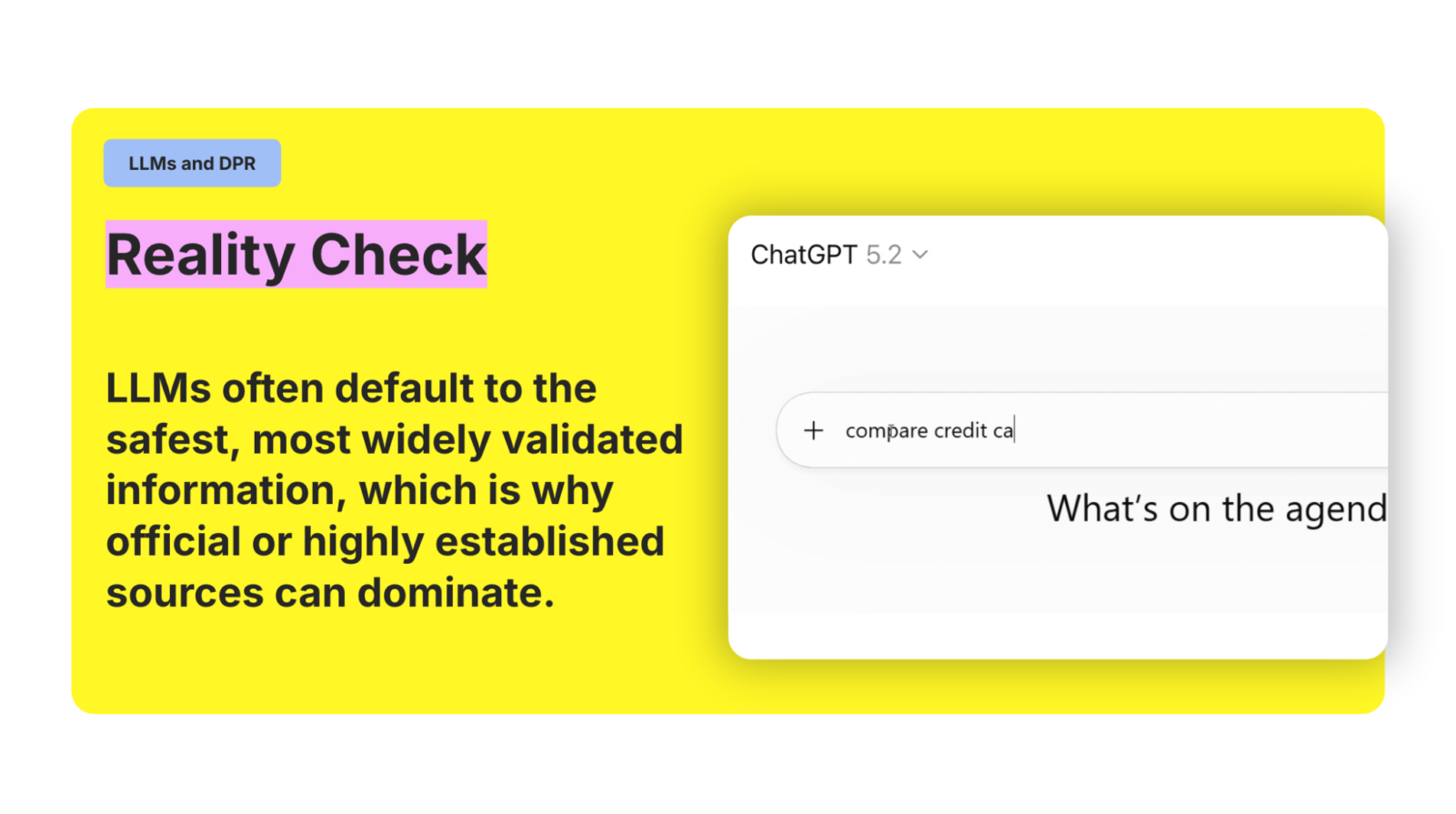
- Authority & Narrative Consensus: LLMs prioritise information that is safe, credible, and widely validated. When multiple highly authoritative publications (like the BBC, The Guardian, or Sky News) reinforce the exact same narrative, AI models are far more likely to surface it.
- Structural Clarity for Reuse: Design your campaign assets for easy extraction. Use organised content layouts with explicit headings, concise key findings, and clear statistical summaries so AI systems can easily read and cite your data.
- The Macro & Micro Balance: Winning in AI requires a blended media approach. Broad, mass-media publications build large-scale authority, while niche, subject-specific sites (like Auto Express) feed the topical expertise and semantic depth that LLMs look for during highly specific user queries.
The Bottom Line
Generative Engine Optimisation (GEO) isn’t about trying to game a black-box system. It’s about building a digital footprint so authoritative, logical, and consistent that search engines and AI platforms have no choice but to include you.
Are you building a digital PR strategy for the internet of today, or the one that is already arriving?