5 Key Themes from Re:commerce 2026

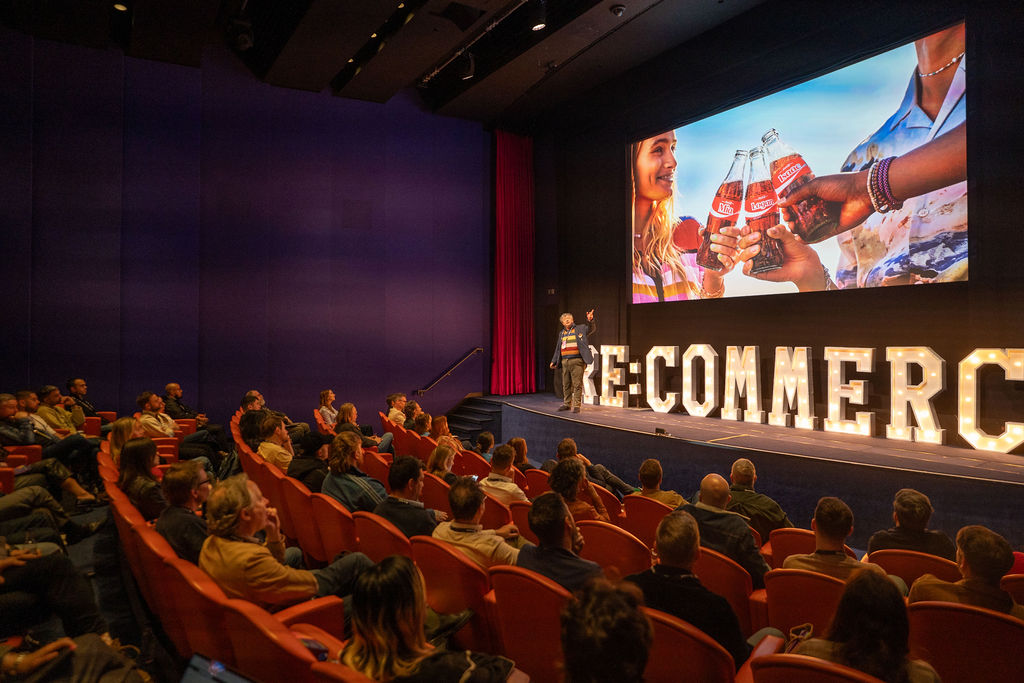
We are only a few days out from Re:commerce 2026, and the energy from Friday’s sessions at The Ham Yard Hotel is still absolutely buzzing. Our expert speakers, wonderful attendees and sponsors made this our most practical and eye-opening event yet.
If 2025 was the year we realised AI was on everyone’s minds, Friday was the day we rolled up our sleeves to make it work in the real world. We saw a massive shift in the conversation this year: moving away from chasing arbitrary metrics dictated by tech platforms and moving toward building subjective trust, technical resilience and algorithmic visibility.
Whether you were in the room or missed out, here are the five definitive themes and takeaways reshaping ecommerce marketing right now.
1. Stop managing marketing, start managing perception
Our first keynote speaker, Rory Sutherland (Vice Chairman at Ogilvy), kicked things off by challenging the very structure of corporate growth. His core argument? Marketing isn’t just a department, it’s a lens for understanding the world.
Too many brands allow themselves to be constrained by short-term financial metrics, treating marketing like the “coloring-in department” rather than an engine for innovation.
“Marketing is the creation of value through the study of perception and subjective measures, rather than the study of objective shit.” — Rory Sutherland
Rory pointed out that human behaviour is driven by how things feel, not just objective reality. For example, Uber didn’t succeed by making taxis arrive faster; it succeeded by using a psychological map to completely eliminate the uncertainty of waiting.
For ecommerce brands, the lesson is clear: Optimise for human psychology, not spreadsheet metrics . If you only use the metrics Google or the major ad platforms give you, you’re catching “technoplasmosis”, a hack that serves the platform’s bottom line, not yours.

2. Conversations are the connective tissue of AI search
As search behaviors shift from traditional query pages to large language models (LLMs) and conversational AI, where are these systems getting their information?
Mairéad Connolly (Agency Lead at Reddit) dropped a truth bomb: Reddit is the number one most cited domain aggregated across all AI models . As consumers face unprecedented digital noise and an era of deep distrust (70% of people in the UK don’t trust CEOs, the media, or the government), they are bypassing corporate copy to seek authentic human vetting. Every two weeks, Wikipedia’s worth of content is generated on Reddit, and 40% of that content is commercial in nature.
Case Study: Škoda Leans into the “We”
Mairéad highlighted Škoda’s brilliant execution on r/CarTalkUK. Instead of treating Reddit like an ad billboard, Škoda actively invited the community to build their perfect version of Octavia. The result? Tangible ROI and brand trust built within the very communities that feed future LLM chat responses.
3. If AI is the gatekeeper, Digital PR is the memory
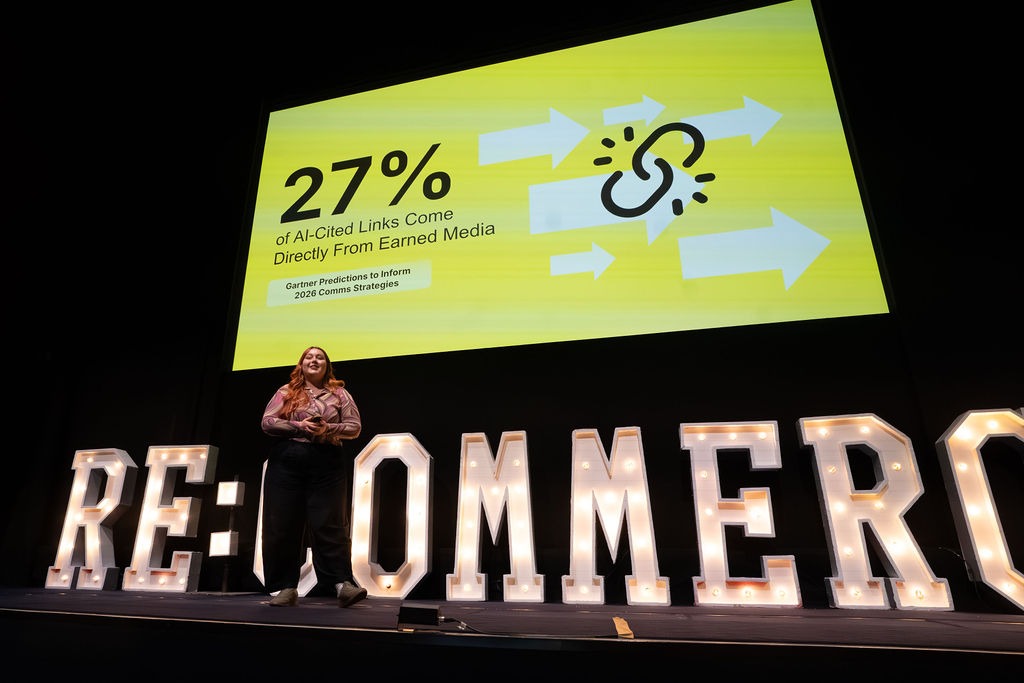
Emily Salt (Digital PR Production Manager at Re:signal) brought numbers to back up how earned media directly impacts AI discovery. Recent data shows that 27% of AI-cited links come directly from earned media.
To be remembered by AI, brands must move away from thin content and focus on rigorous, transparent and repeatable methodologies.
Stronger Methodologies ➔ Stronger Stories ➔ Authoritative Coverage ➔ AI Memory Citation
Emily shared a global campaign analysing over 97,000 Google reviews to find the world’s most “underwhelming” tourist destinations. Built on transparent data, the story scaled across 37 countries, sparked a 165% increase in keyword visibility, and was even adopted by official tourism boards.
Dr. Lauren Ingram (Founder of Women in AI) echoed this in her framework for driving “robot word-of-mouth”. AI thrives on structured, distinct information. If you want your products recommended by AI bots, you have to feed the beast with editorialised, high-quality, human text across public ecosystems.
4. Technical SEO reaches “Maturity Model” status
For years, the standard playbook of title tags and basic schema was enough to get by. But in 2026, Amanda Beales (SEO Team Lead at Re:signal) warned that basic optimisation is no longer cutting it. With AI overviews, organic shopping grids and agentic checkouts (buying directly inside ChatGPT or Chrome), the risk of being invisible has never been higher.
Amanda introduced the PDP Maturity Model, emphasising four critical updates:
- Structured Product Groups: Move away from tracking single pages to utilising Product Group Schema. This explicitly links product variants (size, colour, material) back to parent URLs, avoiding keyword cannibalisation and allowing searchers to filter specific variants directly within organic SERP grids.
- Centralised Data Consistency: Your hardcoded page detail, schema markup and Merchant Center feed must perfectly match. If they clash, Google will suppress rich results or default to a third-party retailer’s data, costing you primary purchase placements.
- Hardcode What Matters: LLM user agents and initial crawl bots frequently delay or completely skip rendering JavaScript. If your reviews, pricing, internal links, or conversion buttons rely on JS to load, AI agents might never see them. If it’s not in the raw HTML, it’s not guaranteed to exist.
- Prioritised Link Architecture: If key pages aren’t prominent in your site structure through internal linking, crawlers (and users) are less likely to find them. Focus on linking to canonical parent products, and be sure to not neglect pagination or sitemap best practice if you want to win.

5. Overcoming governance and systemic blind spots
Executing excellent technical marketing is hard, not because the concepts are wrong, but because the internal corporate systems actively work against them.
Joe Chudley addressed the operational realities of driving technical programs in large, complex organisations. Between restructuring, shifting public vs. commercial priorities and multi-layered stakeholder circles, roadmap momentum can easily stall.
To build a resilient strategy that survives corporate ecosystems, Joe shared these ground rules:
- Anchor SEO in Governance: Embed SEO checks into definitions of done, standards and briefing processes to eliminate single points of failure.
- Reframe as Risk Mitigation: When budgets get tight, rely on loss aversion. Executives hate losing the bottom of their conversion funnels.
- Take the Emotion Out of It: Realise that blockers are systemic, not personal.
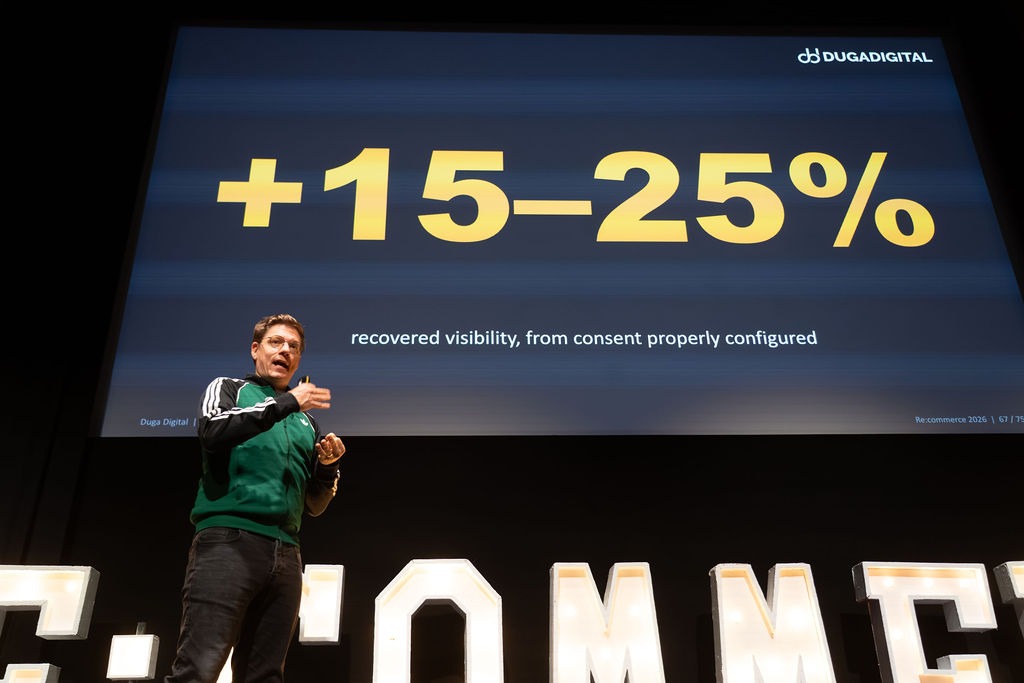
Dan Truman brought this home on the data analytics side. He highlighted a premium British retailer losing over 54% of their tracking data to privacy blockages, ad blockers and broken GA4 setups. By implementing robust server-side tracking and transitioning to Consent Mode v2, they bridged the gap back down to a mere 3.4% discrepancy, giving the brand the visibility required to confidently deploy capital again.
The Ultimate Takeaway
As Dennis Goedegebuure noted while looking back at his decades at eBay and Airbnb, systems change, but the foundational philosophy of capturing structural value remains identical.
The brands winning in search and AI today aren’t attempting to game a single algorithm or find a silver bullet. They are building unified data streams, participating authentically in human communities, and creating entirely new benchmarks instead of obsessively competing on old ones.
As Rory Sutherland beautifully summarised: “Rather than trying to change the world, change how people see the world, when they see the world differently, they behave differently, which then changes the world.”
Want to be a part of Re:commerce 2027?
Thank you to all of our incredible speakers, attendees and our wonderful sponsors for making Re:commerce 2026 our most impactful event yet! Want to stay ahead of the curve? Register your interest below to be the first to hear about early bird access for Re:commerce 2027.